
Every time we pitch a restaurant on running a kids eat free night, we hear the same question.
"Won't I just be giving food away?"
It's a fair question (margins in hospitality are thin enough without handing out free chicken nuggets), so I went and dug through the research, the ATO benchmarks in Australia and other data from the U.S. and some real-world examples to find out whether kids eat free deals actually generate profit for restaurants.
The short answer is yes, most of the time, and by more than most owners expect.
The longer answer is that a kids eat free deal is only as good as its structure, and the venues that lose money on them usually lose it in one very specific place (which I'll get to).
If you'd rather skip straight to your own numbers, our free Kids Eat Free Profit Calculator will run the maths for your venue in about a minute.
Families are the table you want
Start with who you're actually attracting.
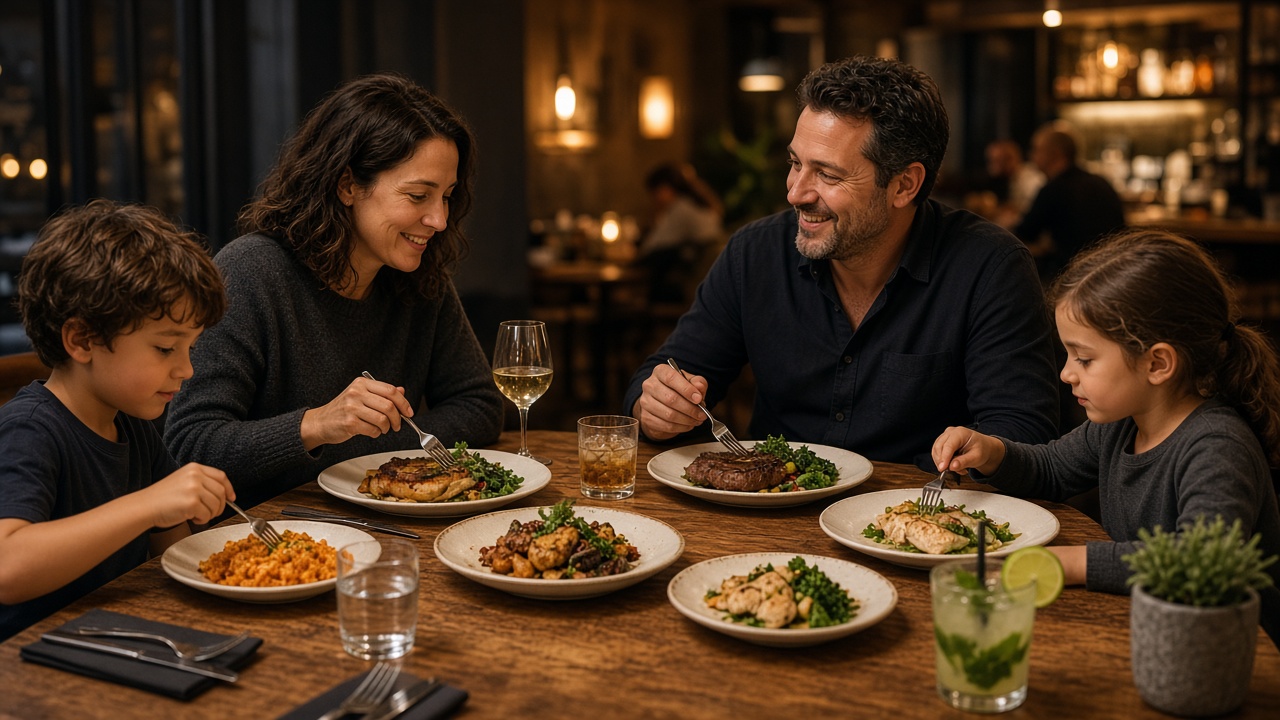
When children under 13 come along to a meal, the average party check goes up by 82%, according to NPD Group's CREST data. A family table isn't a small table with a discount attached, it's usually your biggest table of the night.
Kids also decide where the family eats. C3's research found that kid preferences are the number one driver when families pick a restaurant, and the National Restaurant Association puts the share of diners who weigh up family-friendliness at around 60%.
The problem is that families are exactly the diners who are cutting back right now.
A September 2026 report from the FoodService Association Australia and Vypr found 60% of Australians are eating out less than they were a year ago, and 57% say they often skip dining out because of the cost.
The same report found 39% of diners are now actively using promotions to keep eating out.
That's the opportunity in one line (the families are still out there, they're just waiting for a reason that makes the bill feel manageable).
The maths of one family table
The thing most owners miss is that "free" doesn't cost you the menu price, it costs you the ingredients.
A kids meal that sells for $14 might cost $4 to $5 to plate, and on a quiet Tuesday your chef and floor staff are rostered on whether that table walks in or not.
Meanwhile, the adults at that table are paying full price for their mains and their drinks.
Australian restaurants typically run a cost of sales between 31% and 39% of turnover, according to the ATO's small business benchmarks, so let's use 32% and walk through a typical new family table (two adults, two kids):
| Line item | Amount |
|---|---|
| Two adults at $42 each (mains, drinks, sides) | +$84.00 |
| Food and drink cost on the adult spend (32%) | −$26.88 |
| Kids' paid extras, e.g. drinks or dessert ($5 each, net of cost) | +$6.80 |
| Ingredient cost of two free kids meals ($4.50 each) | −$9.00 |
| Profit from one new family table | +$54.92 |
The free meals cost you less than 10% of what that family spends with you.
Put another way, you're trading $9 of ingredients for $55 of margin you wouldn't otherwise have had.
That's the whole case for kids eat free, and it's why the deal is almost always tied to the purchase of an adult main.
Where it goes wrong: your regulars
Here's the specific place venues lose money.
The families who were already coming in on that night now get their kids meals free too, and for them you don't just lose the ingredient cost, you lose the full menu price.
If six regular family tables come in on your deal night, each with two kids on $14 meals, that's $168 a week in revenue you've given up for no extra visits.
So the real question isn't "do the free meals cost money?" (they do), it's "does the deal bring in enough new families to cover the regulars?"
Using the numbers above, the answer is surprisingly low. At $54.92 profit per new family, you need just four extra family tables a week to cover $168 of regulars' meals.
At twelve new families a week, the same venue is up about $491 a week, or roughly $25,500 a year.
This is also why kids eat free deals behave very differently from blanket discounting.
When Rice University's Utpal Dholakia surveyed more than 600 businesses that ran daily deals, only 44% of restaurant deals turned a profit, and he put that down to restaurants' high variable costs.
A half-price voucher discounts the whole bill, adults included.
A kids eat free deal protects the expensive part of the bill (the adults) and only gives away the cheapest plate on the table.
The other way venues get burned is loose terms. If the deal has no minimum spend and no cap, you'll eventually get the parent who orders a glass of water while the kids eat for free, and every table like that is paid for by the rest.
What happens when venues actually run it
The best-documented small-venue example comes from 110 Grill in Rochester, New Hampshire.
During an August trial of one free kids meal per adult entrée, the restaurant served more than 200 free children's meals a week and saw sales rise by a few thousand dollars a week, with a single Facebook post about the deal picking up over 30,000 views.
The big chains keep coming back to it too.
Denny's extended its kids eat free offer in late 2025 (4pm to 10pm with any adult entrée) at a time when around 40% of American diners said they were eating out less, and the brands don't keep running promotions that don't work.
Here in Australia, TGI Fridays runs a free kids meal from Monday to Thursday with any adult main of $25 or more, which is a textbook example of a well-structured deal (quiet nights only, and a minimum spend that protects the margin).
There's also a psychological reason these deals punch above their weight.
In a well-known experiment by Shampanier, Mazar and Ariely, 73% of people chose a Lindt truffle at 15 cents over a Hershey's Kiss at 1 cent. When both prices dropped by one cent, making the Kiss free, 69% switched to the Kiss.
The price gap didn't change, but the word "free" did the work.
A $14 discount on a kids meal is nice. A kids meal that's free is a reason to pick your venue over the one down the road.
How to structure a deal that pays
The venues that make kids eat free work tend to follow the same handful of rules.
- Run it on your quietest night. Your staff and kitchen are costs you're paying anyway, so every extra table on a slow Tuesday is close to pure margin (on a packed Saturday you'd just be discounting tables you already had).
- Tie it to an adult main, and set a minimum spend. One free kids meal per adult main, with a floor like $25, keeps the maths the way it's shown above.
- Cap it. One free meal per paying adult, from the kids menu only, dine-in only.
- Keep drinks and desserts out of it. Kids' drinks, shakes and desserts are some of the highest-margin items you sell, with beverage pour costs often sitting between 15% and 28%.
- Watch your kids menu costs. Smaller portions don't shrink ingredient costs as much as you'd think, and one menu-costing analysis found a kids nugget meal running at a 54% food cost against 30% for adult mains. Pasta, sliders and wraps usually cost far less to plate than crumbed chicken.
- Make sure families actually hear about it. A deal that only lives on a chalkboard inside the venue mostly rewards the families who were already coming. The whole point is reaching new ones, which is exactly what listings like Kids Eat Free Club are built for.
- Track it. Count family tables on your deal night for a month before and a month after. If new families aren't turning up, change the night or the offer.
Before you commit, run your own numbers through our free Kids Eat Free Profit Calculator.
Put in your average adult spend, your food cost, what a kids meal costs you to plate and how many extra families you expect, and it'll show your weekly and yearly profit, plus the number of new families you need just to break even.
So, do kids eat free deals work?
For most family-friendly venues, yes.
The free meal costs you a few dollars in ingredients, the adults at the table pay full price, and families are the diners most likely to be won over by the word "free" right now.
The deals that fail are the ones that run on busy nights, have no minimum spend, and never reach anyone new.
Get those three things right and a kids eat free night is one of the cheapest ways to fill a quiet night in hospitality.
Related Articles
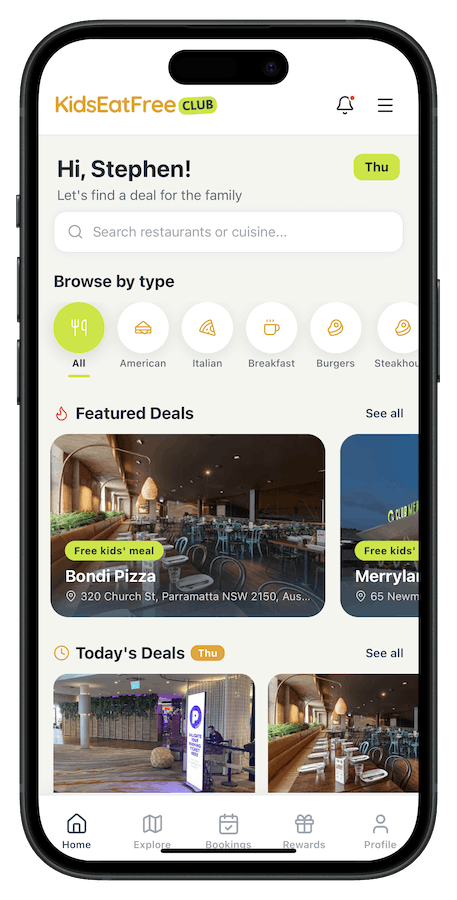
The Kids Eat Free Club App Has Launched!
After many late nights, many iterations and more than a few App Store rejections, the Kids Eat Free Club app is live. Find kids eat free deals near you and feed the family for less.
Reducing the Mental Load for Mothers at Dinnertime
Dinner sounds like a simple question — but for millions of mothers, it’s a daily decision tree. Here’s how Kids Eat Free Club aims to take one piece of that mental load off Mum’s plate.
How Kids Eat Free Deals Actually Work
Kids Eat Free deals are pretty simple: restaurants offer a free kids’ meal when your family dines with them. But exactly how the deal works varies from restaurant to restaurant.